
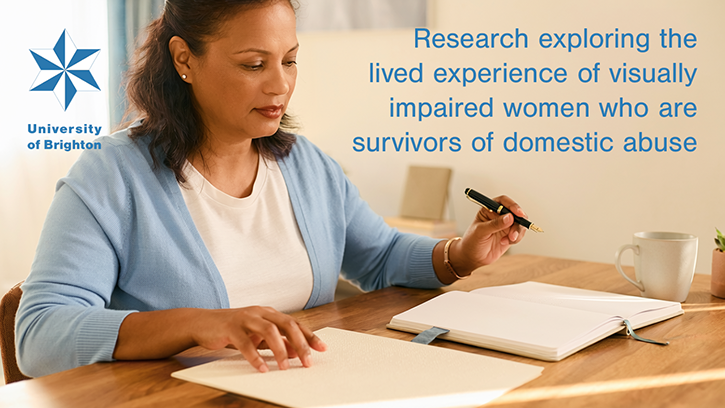
Martia Bevan, a PhD researcher at the University of Brighton School of Humanities and Social Sciences, is currently seeking participants for a significant study titled Every Journey Tells a Story. This research explores the lived experiences of visually impaired women who are survivors of domestic abuse from a male partner.
About Martia Bevan
Martia Bevan has been a volunteer counsellor with Richmond Carers Centre since January 2020, providing person centred talking therapies to unpaid carers. She offers both short-term and open-ended contracts, depending on what is needed as a private counsellor. She has specialist training in domestic abuse, bereavement and disability, including Autistic Spectrum Disorder (ASD). Martia has extensive experience of working with adults presenting with mental health difficulties, chronic illness and the impact of the carer role.
Why this research matters
The intersection of visual impairment and domestic abuse creates unique vulnerabilities and barriers to seeking help. Previous research has indicated that disabled people may be three times more likely to experience abuse than those without disabilities. By sharing their life stories, participants can help increase awareness of these specific issues and contribute to meaningful social change. The insights gained from this study will be instrumental in improving how professionals and support services understand and respond to the needs of visually impaired survivors.
Details of participation
The study focuses on gathering personal narratives to better understand the journey of survivors. It involves two main components:
- Sharing your story: Participants will be asked to tell their story about being a survivor of domestic abuse.
- Creative writing: There is an optional opportunity to take part in a creative writing activity as a way of expressing these experiences.
Martia is looking for women over the age of 18 who have a visual impairment and have survived domestic abuse from a previous relationship with a male partner.
Important considerations
Due to the sensitive nature of the topic, Martia has outlined specific criteria to ensure the wellbeing of all involved. This study involves discussing difficult memories, so it is not advised for individuals currently experiencing high levels of anxiety or stress to participate. Furthermore, anyone with a diagnosed mental health condition is also advised not to take part at this time.
How to participate
If you are an unpaid carer for someone who meets these criteria or if you are interested in the study yourself, you are encouraged to find out more. Engaging in research is a powerful way to ensure that the voices of those with lived experience are heard at the highest levels of academia and policy making.
For further information or to ask any questions about the process, please contact the lead researcher, Martia Bevan: m.bevan2@uni.brighton.ac.uk. She will be able to provide more detail and discuss how you can safely get involved.

